The bench press is one of the most frequently performed exercises in the gym, yet it is also one of the most commonly performed incorrectly. Beginner lifters who lack proper instruction risk injury and slow their progress. This guide covers the setup, execution, and safety considerations a new lifter needs to take into account to bench press correctly.
What is the Bench Press?
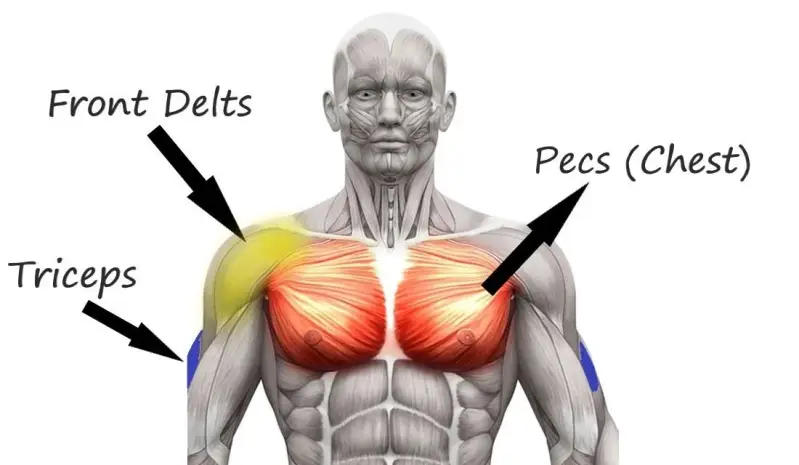
Undoubtedly one of the most well known weight training exercises, the bench press is a compound upper-body exercise where the lifter lies on their back flat on a bench and presses a weighted barbell from chest level until their arms are fully extended. The bench press trains three main muscle groups at the same time: the pectoralis major, anterior deltoid, and triceps. This makes the bench press one of the most effective exercises when it comes to building upper body strength.
Now that you know what the bench press is and what muscles it trains, the next step is understanding why this exercise is so beneficial.
Benefits of the Bench Press
The bench press is a worthwhile beginner exercise that can add significant gains when training. Being a compound movement, it trains multiple muscle groups at the same time, making it a solid exercise for building upper-body strength and muscle mass. Beyond just building muscle, the bench press also helps develop pushing strength that carries over into everyday life.
For beginners specifically, the bench press is a great way to track progress. Because the weight is easily measurable and the movement is straightforward, it is easy to see improvement over time as you gradually increase the weight you are benching.
With those benefits in mind, here is a breakdown of what equipment you will need.
Equipment and Setup
When preparing to bench press, a beginner needs to know what equipment is required. The main setup is a flat bench with a rack built to hold the barbell. The barbell is a long metal bar, weighing 45 pounds on its own, and weight plates are added to each side based on how much weight a lifter wants to press. Most gyms have a dedicated bench press station that includes all of this equipment.
As an extra precaution, collars are clipped onto the ends of the barbell to prevent the weight plates from falling off the barbell during the lift. While many lifters decide not to use them, as most of the time they are not needed, they are a quick and easy safety measure for lifters to use.
A very important factor that beginners often overlook is having a spotter. A spotter is someone who stands behind the bench and is ready to step in and help lift the weight if the lifter cannot complete the rep or loses control of the bar. For anyone new to the bench press, a spotter is crucial when lifting an amount of weight you are unsure about, or if you are working until failure.
Once you have the equipment ready, the next step is getting your body into the correct position on the bench.
Body Positioning and Grip
Before unracking the bar, getting into the correct position on the bench is one of the most important steps to take.
1. Lie flat on the bench with your eyes directly in line with the bar.
2. Make sure both feet are planted flat on the floor.
3. Lower your back to give yourself a slight natural arch, but do not force it as that could lead to injury.
4. Squeeze your shoulder blades together and press them firmly into the bench. This gives your body a stable base to execute the bench press.
After preparing your body by creating a strong base, you then focus on your grip width, something beginner lifters often get wrong. Your hands should be placed slightly outside shoulder width on the bar. Having a grip too wide puts too much stress on the shoulders, and having a grip too narrow puts too much stress on the triceps. A medium grip just outside shoulder width allows the chest, shoulders, and triceps to work efficiently all together. Finally, squeeze your glutes in order to maintain a stable base.
With your body and grip in proper position, you are ready to perform the lift.
How to perform a Bench Press
The bench press follows this straightforward sequence of steps. This section walks through each step in the order the exercise should be performed.
1. Unrack the bar by straightening your arms and pressing it up, then move it directly above your upper chest.
2. Brace your core before lowering the bar.
3. Take a deep breath in as you lower the bar in a slow and controlled manner down to your mid chest.
4. Once the bar touches your chest, exhale and press the bar back up in a slightly diagonal path back to the starting position.
5. After completing your reps, move the bar back over the rack and lower it down until it is secured.
This short video by Jeff Nippard demonstrates the proper setup and execution of the bench press.
Common Mistakes and Safety
Even with proper instruction, there are a few common mistakes beginners tend to make when first learning how to bench press. Being aware of these mistakes before getting underneath the bar can prevent injury and build good habits.
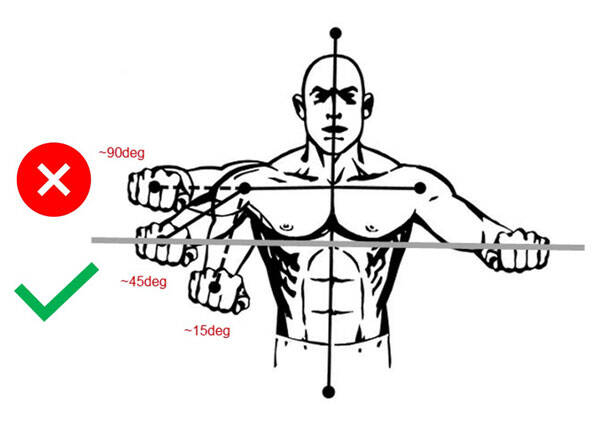
Flaring the elbows out too wide is a mistake most beginner lifters will make. When the elbows are flared out at a 90 degree angle from the body, it puts significant stress on the shoulder joint and can cause shoulder impingement over time. To keep this from happening, the elbows should be tucked at roughly a 45 degree angle from the body.
Bouncing the bar off the chest is also a very common mistake. Dropping the bar on your chest and using the bounce as momentum to help press the bar back up decreases tension from the muscles and increases the risk of injury to the chest and ribs. The bar should be slow and controlled during the pressing motion and the downwards motion of the exercise.
Holding your breath throughout the entirety of the lift is another mistake seen too often. Inhaling on the way down, and exhaling on the way up is the proper breathing pattern.
References
https://pmc.ncbi.nlm.nih.gov/articles/PMC11224528/
https://blog.nasm.org/biomechanics-of-the-bench-press
https://exrx.net/WeightExercises/PectoralSternal/BBBenchPress
https://www.frontiersin.org/journals/physiology/articles/10.3389/fphys.2024.1393235/full
https://www.healthline.com/health/exercise-fitness/bench-press-muscles-worked#what-it-is
Create Your Own Website With Webador